


On January 18th, the UK Parliament held a backbench debate (allowing backbenchers to raise local or national issues and receive responses from relevant government ministers), focusing on the UK's regulation of e-cigarettes, the World Health Organization (WHO), and the different positions of the organization and the UK government towards e-cigarettes. The debate was jointly initiated by legislators Andrew Lewer, Mr. Virendra Sharma, and Martyn Day to challenge the WHO's negative stance on e-cigarette control.

Previously, the 10th Conference of the Parties to the World Health Organization Framework Convention on Tobacco Control (WHO FCTC), which was forced to be postponed, was officially scheduled to be held in Panama from February 5th to 10th. The UK will send a delegation to participate in this conference, and the discussion on the new tobacco issue will become one of the focuses of the conference.
For a long time, WHO has been committed to controlling the use of tobacco and nicotine products, especially e-cigarettes. According to a report on December 14, 2023, the WHO emphasized the need for urgent action to control e-cigarettes to protect children and non-smokers, and minimize health hazards to the public. The WHO points out that nicotine contained in e-cigarettes is highly addictive and harmful to health.
Member Andrew argued against this at the meeting. He cited a survey by the Cancer Research UK, stating that "it is not nicotine, but chemicals produced during tobacco combustion that cause lung cancer.". "
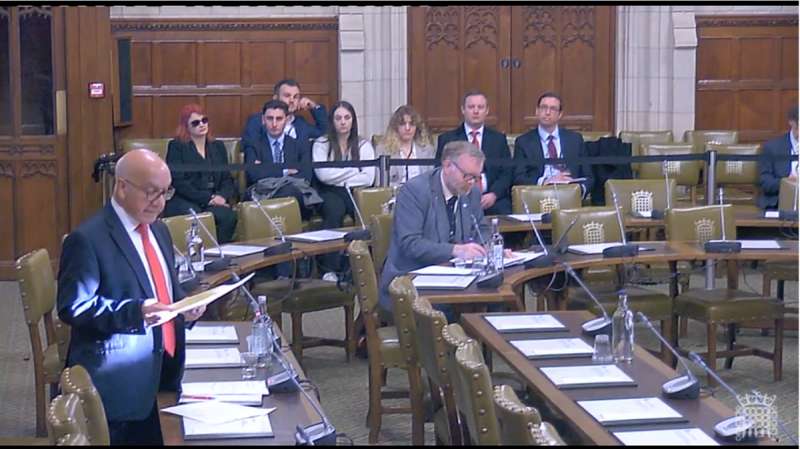
Based on this theoretical discovery, throughout the debate, Member Andrew viewed atomized e-cigarettes as a "tobacco pest reduction policy product", which has always been the main direction of the UK government's tobacco control policy. He adheres to two central arguments. One is that new types of tobacco, including atomized electronic cigarettes, should not be taxed at the same rate as traditional cigarettes; Secondly, flavoring atomized e-cigarettes should not be prohibited. "If there are no tax (price) incentives and no taste differences compared to cigarettes, what else can motivate people to quit smoking?"
In addition to calling on the British delegation to uphold the country's position on the role of e-cigarettes in smoking cessation at international conferences, Andrew also questioned the entire WHO organization during the debate and raised the question of whether to examine the scale of UK donations to the organization. Because the UK is currently one of the largest funders of WHO, it is important to ensure that taxpayers' money is effectively utilized.
The co initiator of the debate, Villendra, who spoke later, stated that "COP10 and WHO should not make it harder for people who want to quit smoking through e-cigarettes." Therefore, policies that excessively regulate e-cigarettes, heated tobacco, and oral nicotine bags are questionable.
He also stated that although the UK is globally leading in nicotine reduction policies, it can still refer to the advanced experience of other countries in successfully controlling smoking using new nicotine products. He takes Japan and Sweden as examples, where heating cigarettes and organic mouthwash cigarettes have also significantly reduced smoking rates. There are still better ways for the UK to compromise and achieve a better outcome.
Labour politician and Bristol South District Councilor Karin Marguerite Smyth also participated in the debate. After expressing her expectation for the British delegation to participate in the contracting conference and convey her country's voice, she stated that many legislators have received inquiries from voters about e-cigarettes and smoking, as this will be the central issue of COP10. Voters are concerned that this meeting will affect the future use of e-cigarettes by British citizens as smoking cessation products. She asked the Minister of Public Health if he plans to include other nicotine products in the regulatory process in the upcoming government bill.
Regarding the upcoming COP10, she described the UK as a "outlier" on the issue of e-cigarettes, and therefore will clearly state the UK's position at the meeting that e-cigarettes are a very important tool to help adults quit smoking. "But regarding whether the current amount of donations to WHO should be changed, the UK government tends to maintain the current level." She ultimately stated that she will provide a statement to parliament after COP10, explaining the situation at the meeting.
There has always been a significant difference between the UK's stance on new types of tobacco, especially atomized e-cigarettes, and the views of the WHO. The UK government has always supported e-cigarettes as an alternative to reducing smoking hazards. According to the UK government, e-cigarettes can help smokers quit smoking, and their harm is far lower than traditional tobacco products.
A report from the Policy Exchange in the UK shows that smoking has a significant impact on the economy, and reducing smoking rates not only improves health conditions and reduces the burden on the national health service system, but also promotes productivity and economic growth